
Lesson 9 of 10
Becoming an ISO 19650 Champion: What’s Next for Your Team?
This video is the final recap of the ISO 19650 Certification Ready course, reflecting on the full journey from gap analysis and process improvement through to audit readiness, non-conformities, and certification preparation. The written guide below reinforces the key themes covered throughout the course, including why the compliance checklist simplifies the entire process, how the three-step system gives teams a structured path from gap analysis to audit, why certification builds confidence and collaboration across departments, and why the audit process is often far less intimidating than teams expect when they have the right structure, support, and training behind them.
What completing the ISO 19650 Certification Ready course means for your team
Completing the Certification Ready course is a significant achievement. It means your team has worked through the full certification preparation process, from understanding where your organisation stands against the standard, through identifying and closing gaps, to preparing for the audit itself. This final video brings that journey together and reinforces an important message: ISO 19650 certification does not need to be overwhelming. With a structured approach, the right tools, and proper support, the process becomes practical, manageable, and even rewarding.
The foundation of the entire course has been the compliance checklist. Throughout the discussions in this video, the checklist is highlighted as the single most powerful tool for simplifying the certification journey. It breaks down the requirements of the standard into clear, actionable items that your team can work through systematically. Rather than trying to interpret the standard from scratch, the checklist gives you a structured reference that shows what is covered, what still needs to be done, and how far your organisation has progressed. For many teams, the checklist is what transforms the certification process from an abstract concept into something concrete and achievable. The Scope module (opens in a new tab) provides the environment for managing this checklist with proper status tracking, evidence attachment, and team collaboration built in.
The course followed a clear three-step system. Step one is the gap analysis, where your team assesses how far your current practices are from full compliance with the standard. This step uses the checklist as a baseline and produces a gap analysis report that documents exactly where your organisation stands. Step two is closing those gaps, using the templates (opens in a new tab), guidelines, and resources available through the Plannerly platform to bring each area into alignment with the standard. This includes updating documentation in the Docs module (opens in a new tab), refining workflows, and building team awareness through training (opens in a new tab). Step three is the audit readiness phase, where your team confirms everything is in place, completes a final readiness review, and books the audit with confidence.
One of the strongest themes in this video is how certification builds confidence across teams. ISO 19650 certification is not just an individual achievement or a management exercise. It is a company-wide effort that brings together professionals from different departments, different disciplines, and different stages of the project life cycle. Working through the certification process together creates a shared understanding of how information should be managed, what the roles and responsibilities are, and how the organisation's workflows connect to the requirements of the standard. As discussed in the video, this shared understanding is a team-building exercise. People across the organisation learn to speak the same language, follow the same processes, and hold each other accountable to the same standards. The result is not just a certificate but a measurable improvement in how projects are delivered. Teams that have been through the Expert course and the Certification Ready course have the depth of knowledge to lead this effort within their organisations.
The value of ISO 19650 certification (opens in a new tab) extends beyond process improvement. It provides market credibility that signals to clients, partners, and the wider industry that your organisation follows internationally recognised best practices for information management. ISO 19650 gathers the learnings of over three decades of building information modelling and information management practice into a single standard. Teams that achieve certification are not just following a set of rules. They are implementing the industry best practices (opens in a new tab) that help avoid the pitfalls and dead ends that other teams have encountered. For organisations working internationally, the certification provides a common framework that ensures everyone understands what the client expects and how to meet those requirements, regardless of location or background.
Perhaps the most reassuring message from this video is that the audit process itself is not as scary as people expect. The auditors are not there to catch you out. They want you to succeed. As the discussion highlights, many certification assessors (opens in a new tab) act more like trusted friends who guide you through the process, pointing out areas for improvement in a constructive way. The audit has two stages: a documentation review and a live project implementation review. If your team has followed the structured preparation process, completed the checklist, closed the identified gaps, and ensured that a live project demonstrates your workflows in action, both stages become manageable. And even if the auditor raises non-conformities, these are simply opportunities for improvement. You will receive a defined timeframe to address them, and the Plannerly support programme (opens in a new tab) is there to help you through every step.
For anyone still considering whether to start the certification journey, the advice from the course is clear: get started. Even if your organisation is not ready to commit to the full audit process immediately, going through a gap analysis and using the checklist to assess your current practices can be a valuable first step. You may be surprised to discover that many of the workflows and processes already exist within your company, just under different names or in slightly different forms. The gap analysis helps you see where you stand, and from there, you can build incrementally toward full compliance and certification.
The certification journey at a glance
- Complete the gap analysis - Use the compliance checklist to assess your organisation's current practices against the requirements of ISO 19650. The readiness check provides a structured framework for this assessment, and the gap analysis report documents your findings.
- Close the identified gaps - Work through each gap using the available templates (opens in a new tab), guidelines, and resources. Update your documentation in the Docs module (opens in a new tab), refine your workflows, and ensure that changes are embedded in practice rather than just described on paper.
- Train your team - Build awareness and shared understanding across the organisation through structured training (opens in a new tab). Certification requires that team members understand the workflows they are responsible for, not just that management has documented them.
- Prepare for the audit - Complete the audit preparation phase by confirming that all checklist items are verified, your documentation is centralised and complete, and a live project demonstrates genuine implementation of your ISO 19650 workflows.
- Book and complete the audit - Work with a certification assessor (opens in a new tab) to schedule the two-stage audit. Stage 1 reviews your documentation. Stage 2 reviews your live project implementation. Address any non-conformities within the specified timeframe.
- Celebrate and continue improving - Certification is not the end of the journey. It is the foundation for continuous improvement. Use the action plan to maintain momentum, keep your processes current, and build on what your team has achieved.
What you'll learn
- The power of the compliance checklist - Why the checklist is the single most important tool in the certification journey, how it simplifies the process by breaking the standard into actionable items, and why teams consistently identify it as the key to building confidence throughout the preparation phase.
- The three-step system - How the structured approach of gap analysis, gap closure, and audit readiness gives teams a clear and manageable path from initial assessment to certification, with defined milestones at each stage.
- Certification as team building - Why the certification process brings together professionals from different departments and disciplines, creates a shared language for information management, and strengthens collaboration across the organisation in ways that go beyond compliance.
- Market credibility and best practice - How ISO 19650 certification signals to clients and partners that your organisation follows internationally recognised best practices, and why the standard represents over three decades of industry learning about effective information management.
- The audit is not as scary as you think - Why the audit process is often far less intimidating than teams expect, how certification assessors typically act as supportive guides rather than adversarial inspectors, and why non-conformities are simply opportunities for structured improvement.
- Getting started even if you are on the fence - Why running a gap analysis and working through the checklist is a valuable first step even for organisations that are not yet ready to commit to the full audit, and how many existing processes may already align with the standard under different names.
Common questions
What certificate do I receive for completing the Certification Ready course?
On completing the course, you receive a certificate confirming that you have completed the ISO 19650 Certification Ready training. This demonstrates to your auditor that you have followed a structured preparation process. It is separate from the company-level ISO 19650 certification, which requires passing the external audit. You can find details on how Plannerly certificates and badges work (opens in a new tab) in the help centre.
What if my company is not ready to book an audit yet?
That is completely fine. Even without booking an audit immediately, the knowledge and processes you have built through the course have real value. Running through the readiness check and compliance checklist helps your organisation standardise its information management practices, which improves project delivery regardless of whether you pursue formal certification straight away.
How does ISO 19650 certification benefit teams working internationally?
ISO 19650 provides a common framework for information management that is recognised globally. Teams that are certified can work with clients and partners in any country with a shared understanding of roles, responsibilities, information requirements, and delivery workflows. This removes ambiguity and ensures that everyone is speaking the same language (opens in a new tab) regardless of location or organisational background.
What support is available after completing the course?
The get ISO 19650 compliant programme (opens in a new tab) provides ongoing coaching support through the audit process and beyond, including help with addressing non-conformities, accessing updated templates, and maintaining compliance. The key resources and global support (opens in a new tab) page covers all the available support channels.
Is it worth starting with just a gap analysis?
Absolutely. Many organisations find that simply running a gap analysis reveals that they are already closer to compliance than they expected. Existing workflows and processes often align with the standard but may use different terminology or lack formal documentation. The gap analysis gives you a clear picture of where you stand and what would need to change, making it much easier to decide whether and when to pursue formal certification.
Discussion
16 comments
Sign in to read the 16 comments and join the conversation.
Sign inExplore further
 Becoming an ISO 19650 champion: what's next for your teamHow to maintain momentum after certification and lead the ongoing improvement of information management practices across your organisation.
 ISO 19650 certificationAn overview of the full certification process and how Plannerly supports teams at every stage. (opens in a new tab)
- Free BIM and ISO 19650 trainingThe full catalogue of free training courses covering everything from the basics through to expert-level ISO 19650 workflows. (opens in a new tab)
 The importance of ISO 19650Why the standard matters for the construction and built environment industries and the benefits it delivers at organisational and project level. (opens in a new tab)
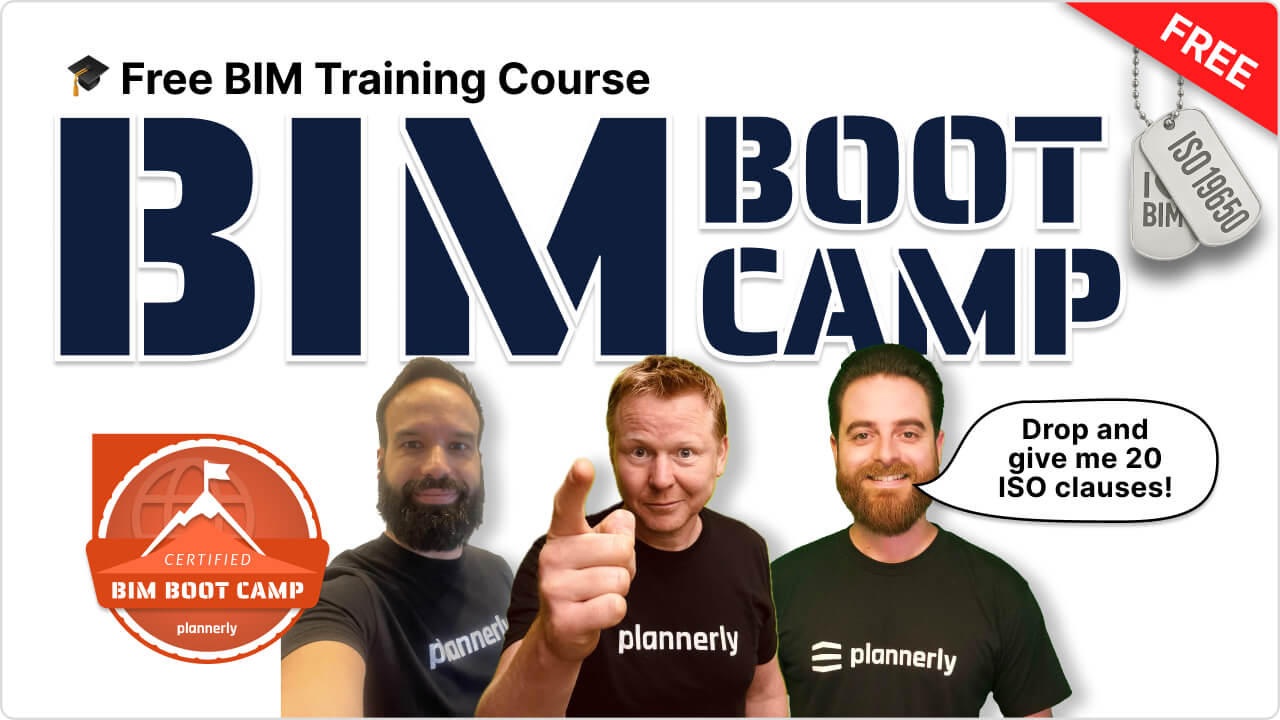 BIM Boot CampA structured programme for teams that want to accelerate their BIM and information management capability alongside the certification journey. (opens in a new tab)