What is an EIR?
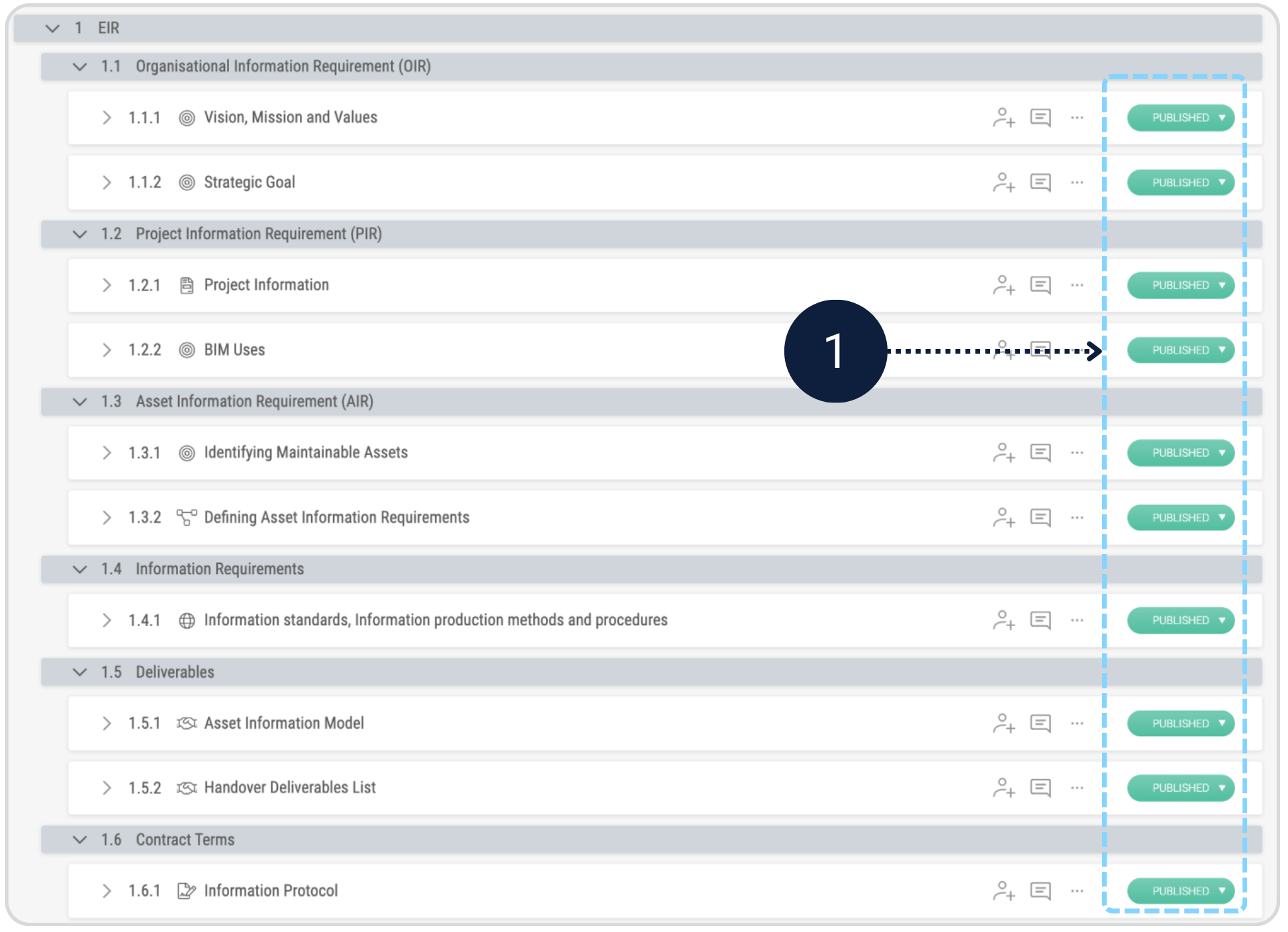
Exchange information requirements (EIR) are what one party asks another to deliver under an appointment. The appointing party - the client - writes an EIR for the lead appointed party and issues it with the tender; the lead appointed party then writes one for each appointed party in its team. Each requirement should trace back to the client's OIR, PIR and AIR. ISO 19650-2 sets out what the EIR covers, and the UK BIM Framework's guidance on developing information requirements shows how to write one.
What's in the EIR template
- The information requirements themselves - what you need and why.
- The level of information need for each: how much geometry, data and documentation.
- Acceptance criteria: the standards, methods and checks each requirement must pass.
- Supporting information: existing asset information, shared resources and library objects you'll provide.
- The dates, tied to the project's information delivery milestones.
From an EIR to checks the supply chain can run
A PDF can't be checked; a list can. In Plannerly you write the EIR in Docs from the template, and build the requirements as a list in Scope - from templates, the buildingSMART Data Dictionary or a spreadsheet. Export them as an IDS file for any checking tool, and models are checked against them automatically in Verify. The information requirements use case shows the whole job, and the complete guide to IDS explains the checks.