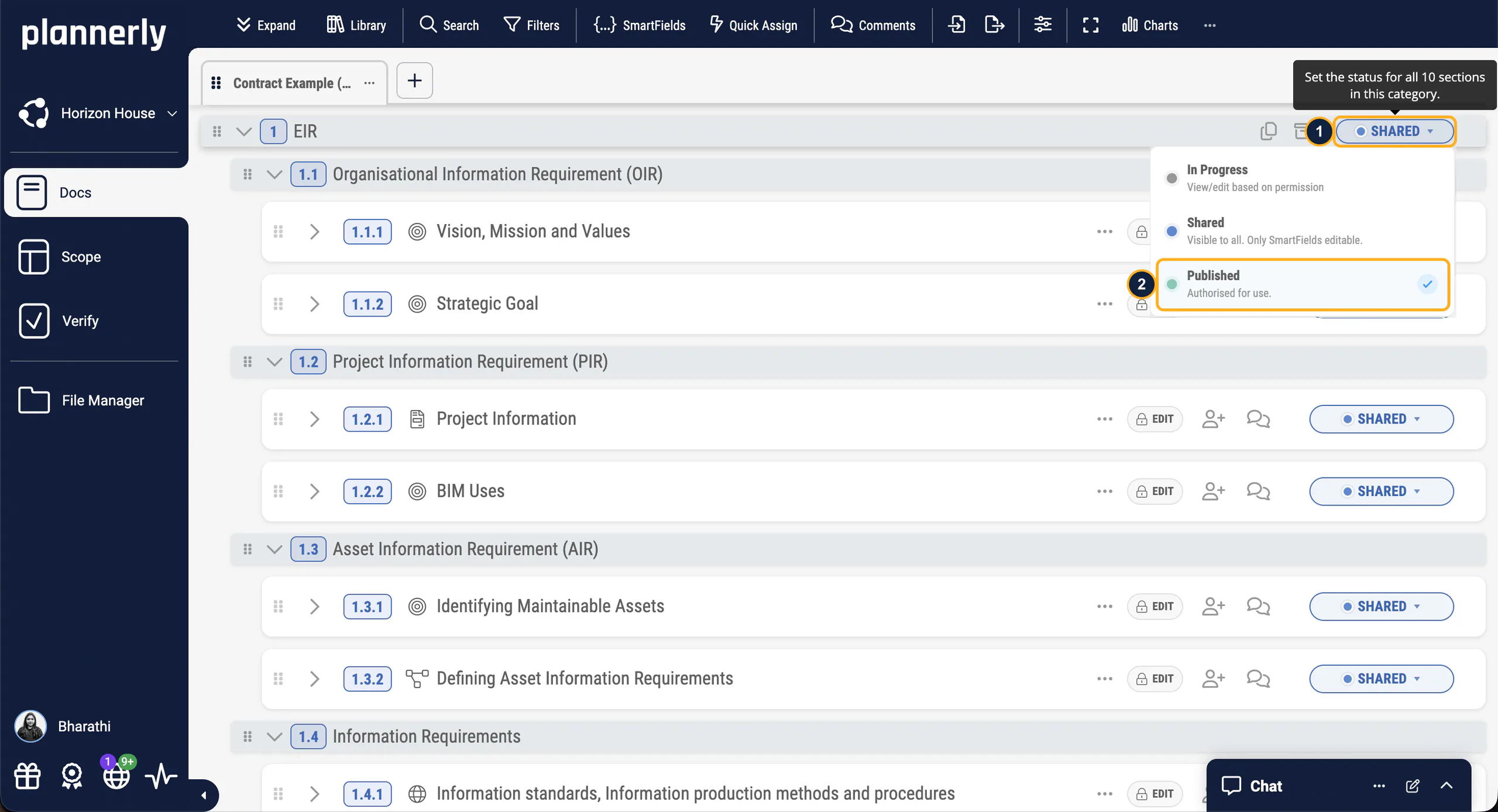
What are OIR, PIR and AIR?
ISO 19650-1 describes a chain of information requirements that starts with the client, not the project:
- OIR - organisational information requirements: the information the organisation needs to meet its goals - running its business, managing its assets, meeting regulation.
- PIR - project information requirements: the information needed to make the key decisions on this project, stage by stage.
- AIR - asset information requirements: the information needed to operate and maintain each asset once it's handed over.
Together they decide what goes in each EIR. Skip them, and the EIR is copied from the last job.
What's in each template
- OIR template: your organisation's goals, the questions you need information to answer, and who uses the answers.
- PIR template: the project's key decision points and the plain-language questions behind each one.
- AIR template: the assets you'll maintain, the information you need about each one, and the format you need it in.
Why the AIR works better as a list
An AIR written as prose can't be checked. In Plannerly you keep the AIR as a structured list of assets in Scope - entered by hand, from templates or the buildingSMART Data Dictionary, or imported from a spreadsheet - with the information each one needs and a rule to check it. Then you can contract for it and check the models against it. Create an AIR in Plannerly walks through it, and the UK BIM Framework's guidance on developing information requirements covers all three.